
What does a small SEO agency actually need to run? One tool per job: something that produces client content, a partner you trust for links, a way to turn Search Console into a monthly report, a way to bill retainers, and a way to keep your team doing the work the same way twice. Here are nine tools organized by those jobs, starting with Blawgy for content, uSERP for links, GSC Wizard for reporting, Fastbooks for billing and Oleno for process. Every claim below was checked on the vendor’s own site on 12 November 2026.
One tool per job: the stack at a glance
Here’s the short version. If you only read one thing, read this table and skip to the job that’s hurting you most this month.
| Job | Tool | What it takes off your plate |
|---|---|---|
| Client content | Blawgy | Writing and publishing blog posts to every client site, under your brand |
| Link building | uSERP | Earning editorial links you’d put your agency’s name behind |
| Reporting | GSC Wizard | Turning Search Console into a finished client report through Claude or ChatGPT |
| Billing | Fastbooks | Recurring retainer invoices, payment reminders and the books |
| Process | Oleno | Keeping the team’s AI work on the same playbook, brief and review steps |
| Proposals | Proposify | Branded proposals with e-signatures |
| Client updates | Loom | Screen-recorded walkthroughs instead of another status meeting |
| Task tracking | Trello | One board per client so nothing lives in someone’s head |
| Booking calls | TidyCal | A booking link that can also take payment |
Notice what isn’t on the list: an all-in-one “agency OS.” Those exist, and some are fine, but a small agency usually pays for ten modules and uses three. You’re better off picking the best tool for each job and replacing one when it stops pulling its weight.
Content: Blawgy publishes client blogs under your brand
Content is the job that eats a small agency alive. Every client wants a steady blog, and every blog needs a keyword target, a draft, an edit, an upload and a report. Multiply that by 20 clients and you’ve hired yourself into a content mill.
Blawgy’s agency program is built for exactly that shape of work. It writes and publishes search-driven articles to every client site on whatever schedule each one needs, “a few a week or a few a month,” and does it under your brand. Client dashboards sit on your domain with your logo, and the weekly reports go out under your name.
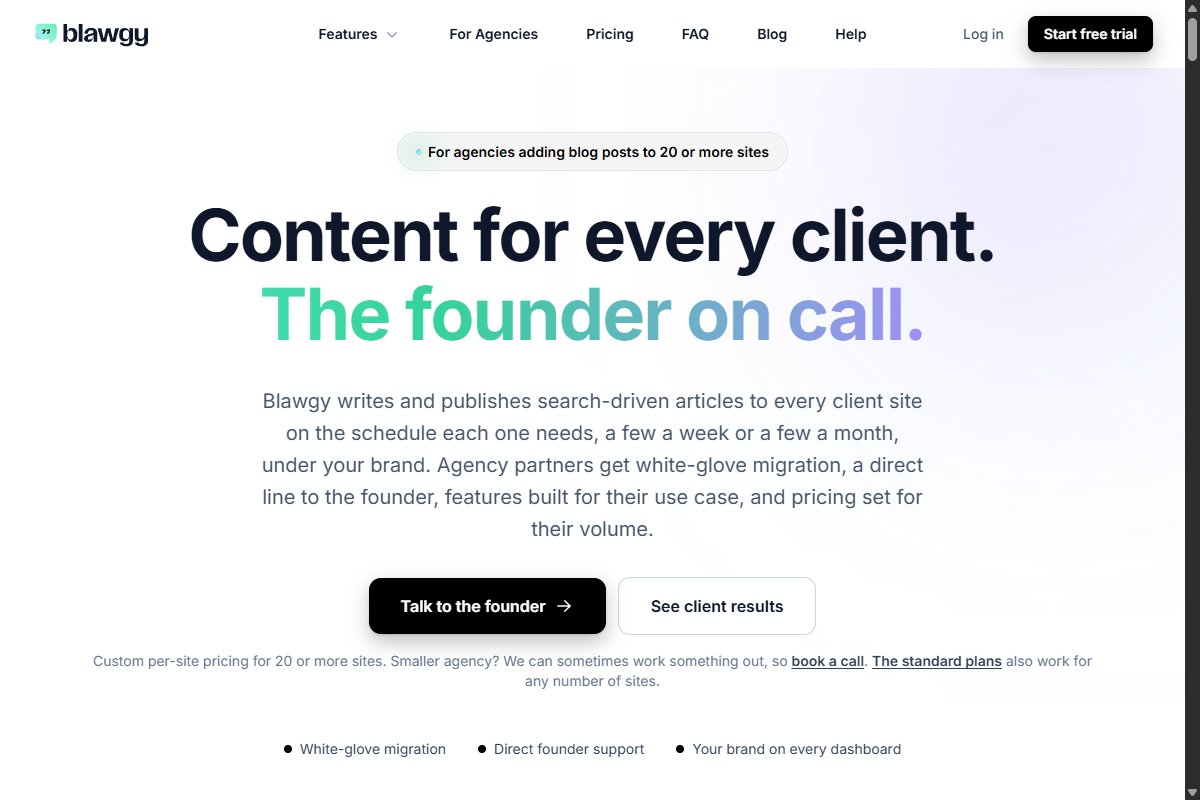
The parts that matter if you’re running more than a handful of clients:
- Guardrails. You write a rule once (compliance language, brand voice, banned words) and attach it to any set of client sites. Blawgy says anything that still breaks a rule is held and never goes live.
- Review or autopilot per client. Your nervous legal client gets a review step; your easygoing local client doesn’t.
- Bing submission on publish. New client articles are sent to Bing the moment they publish, which is how they get in front of ChatGPT search and Copilot sooner.
- Migration done for you. For agencies at 20 or more sites, Blawgy moves your clients over by hand and prices per site below its public plans. Smaller agencies can use the standard plans.
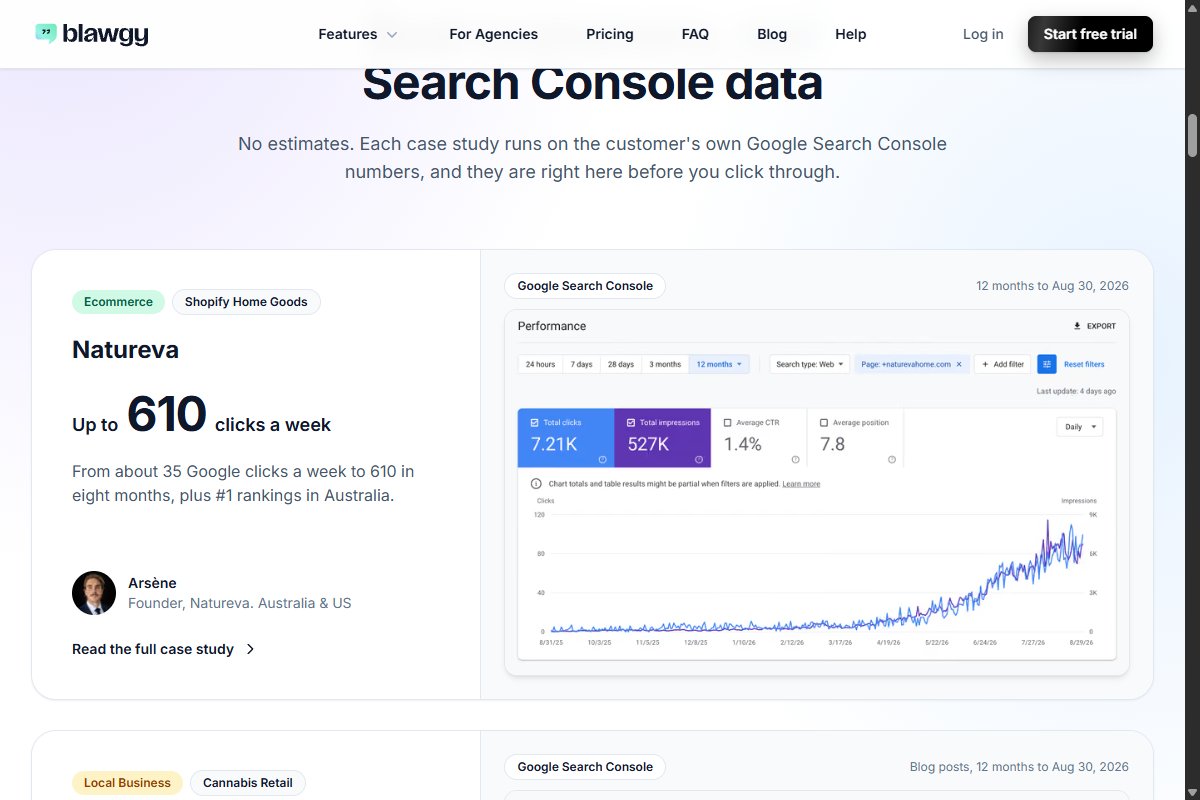
What I like is that Blawgy puts the customer’s Search Console chart right on the page instead of a vague “3x traffic” badge. Their Natureva example went from about 35 Google clicks a week to 610 over eight months, according to Blawgy. That’s their number, not ours, but it’s shown on Google’s own chart and you can read the full case study before you call. (Blawgy doesn’t have an Unscripted interview yet, so there’s no clip here; that second image is another look at its site.)
Links: uSERP, when you need a link partner you’d vouch for
Most small agencies don’t build links in-house, and they shouldn’t try to fake it. The outreach is slow, the good placements take relationships you don’t have yet, and one bad vendor can put a client’s site in a hole you’ll spend a year digging out of. So the real job here is picking who you trust with it.
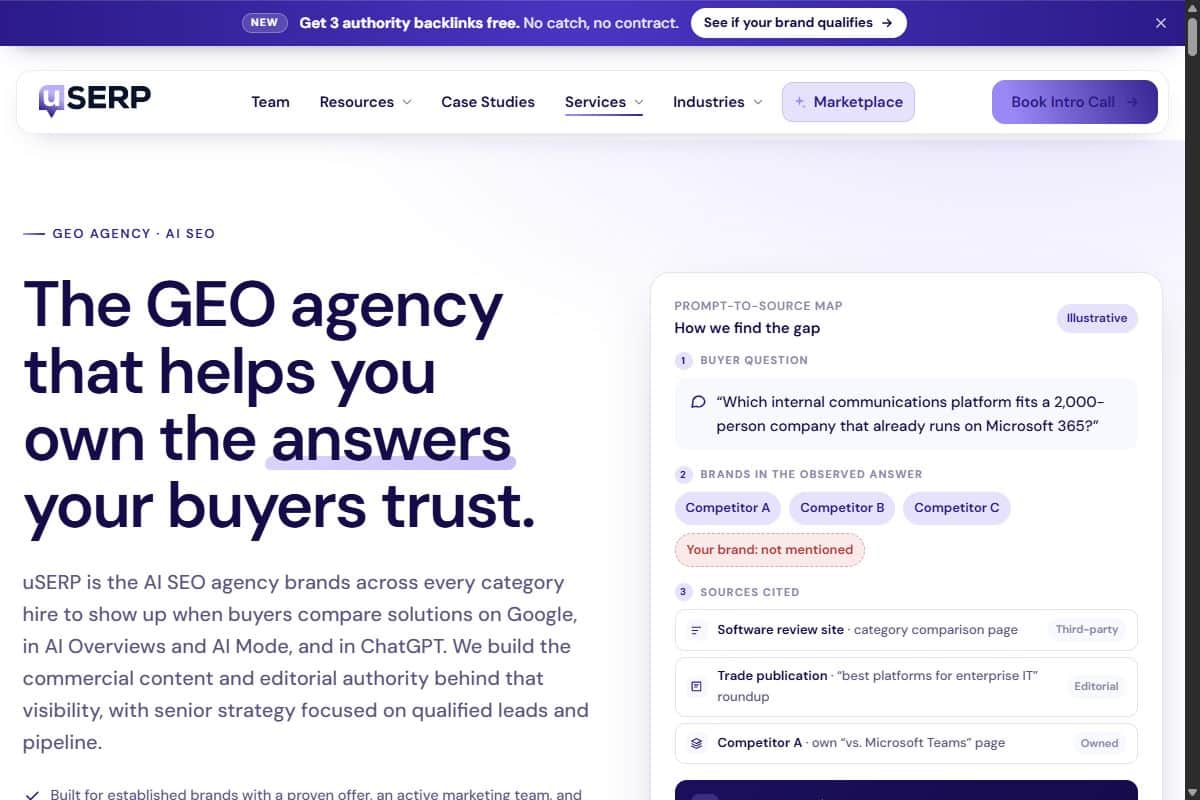
uSERP is a link building agency that earns editorial links and mentions through content-led, bespoke pitch campaigns. Its site lists 575+ clients served, 42 published case studies, and five consecutive years named a top link building company by Clutch (2021 to 2025). It also runs a GEO agency practice for brands chasing AI search visibility. One thing to know going in: uSERP’s site speaks to brands directly and doesn’t advertise a white-label program, so ask on the intro call how they work alongside an agency before you build it into a client proposal.
Jeremy Moser, uSERP’s co-founder and CEO, came on the Unscripted SEO Podcast and was blunt about the risk side of this job. He doesn’t recommend anything “even remotely in a gray area” to clients with a long-term outlook, because what works for one to six months is “a ticking time bomb.” His advice for anyone buying SEO work applies twice over when you’re the one choosing a vendor for your clients:
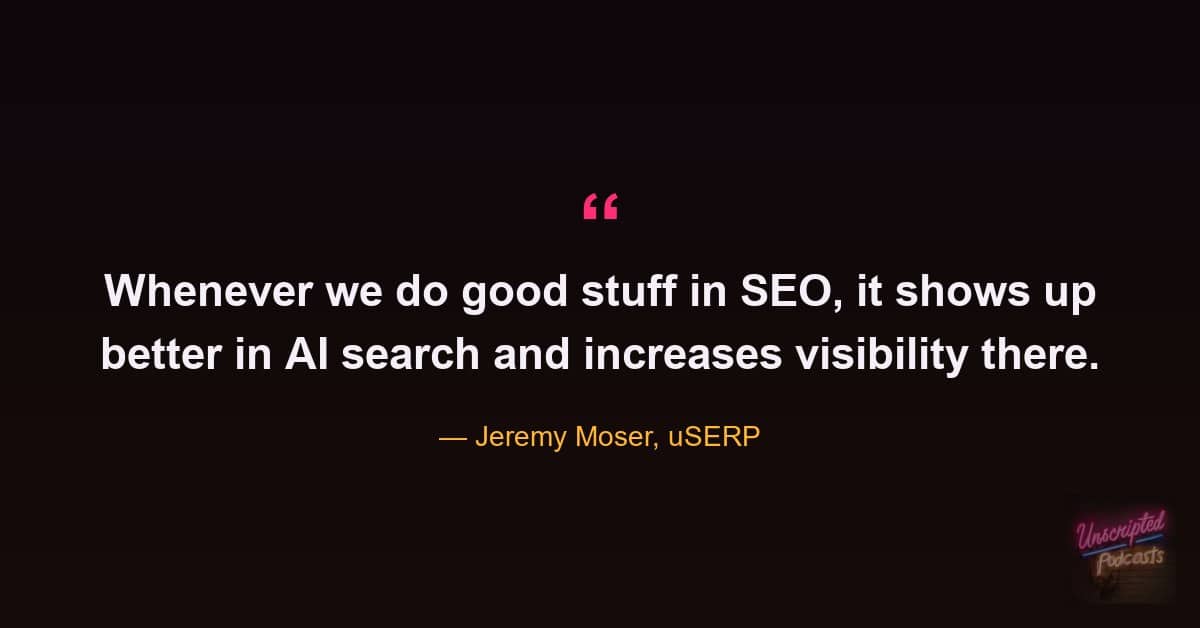
“If you’re going to invest in SEO and it’s a long-term thing for you, like just really be cautious about who you’re hiring and doing things by the book.”
— Jeremy Moser, uSERP
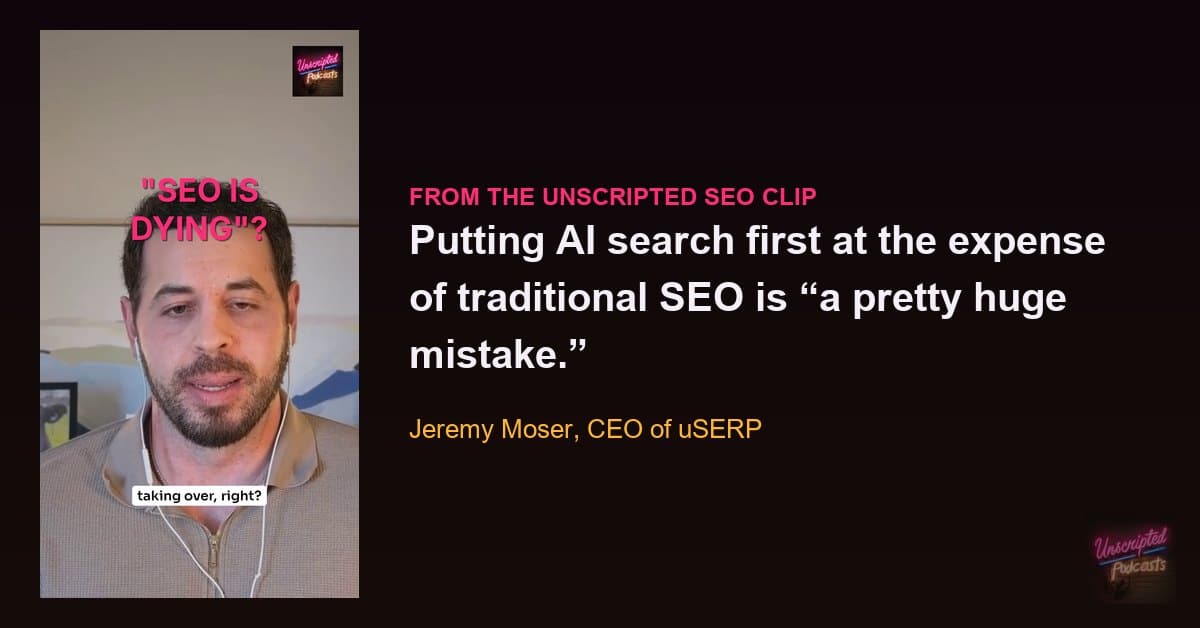
He also gave you the vetting checklist you should run on any link a vendor hands you. First, is the linking site an actual, legitimate company? Second, does it have real authority and rank for relevant terms? Third, is its traffic healthy, and does the link make sense in context? Anchor text comes after all three. You can hear the whole thing in the full Jeremy Moser episode.
Reporting: GSC Wizard writes the monthly report from real Search Console numbers
Reporting is where small agencies quietly lose a day a month per client. You export, you pivot, you screenshot, you write the “what happened” paragraph, and you do it again for the next client. If you’ve already tried handing raw Search Console exports to ChatGPT, you’ve probably also caught it inventing a number.
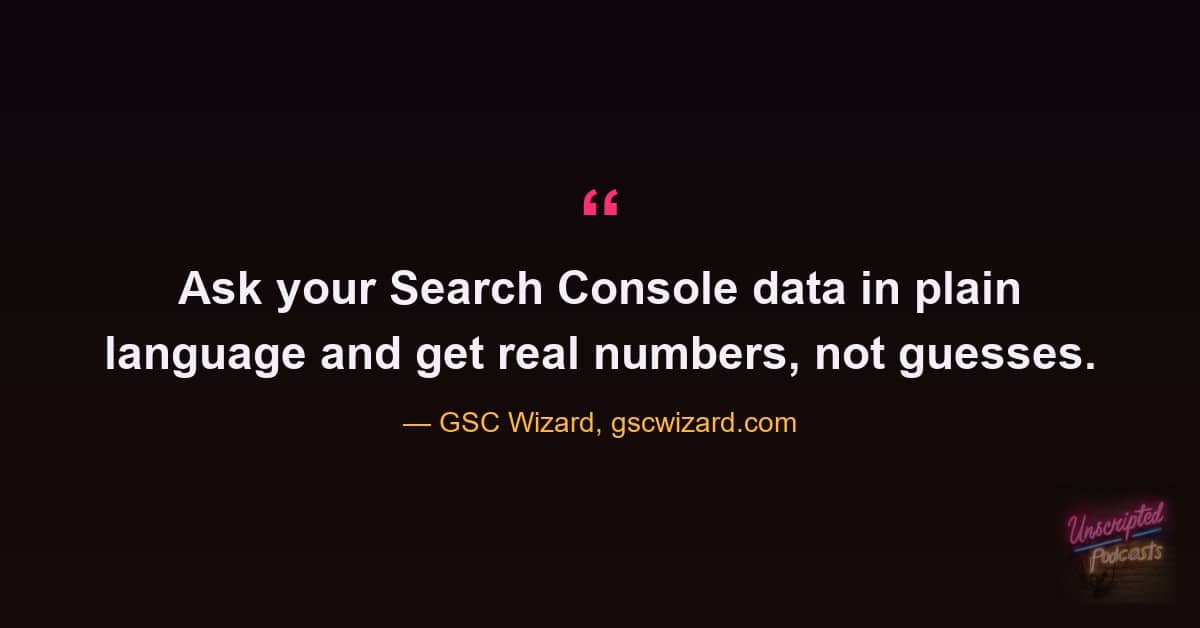
GSC Wizard’s Google Search Console MCP connects your Search Console data to Claude, ChatGPT, Grok or any MCP-capable assistant. The difference from a typical GSC MCP is where the math happens: GSC Wizard runs the analysis server-side on a ClickHouse warehouse and hands the model finished figures, so the assistant reads your clicks and impressions instead of guessing at them. It says a full SEO report over a 4 GB dataset takes about 4.4 seconds.
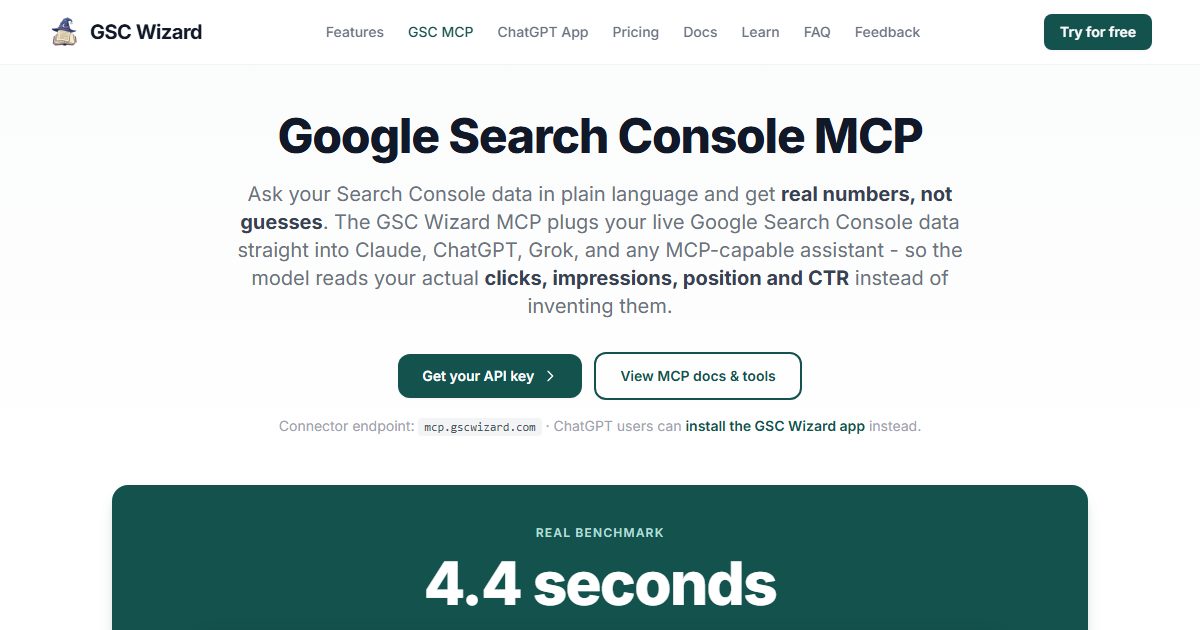
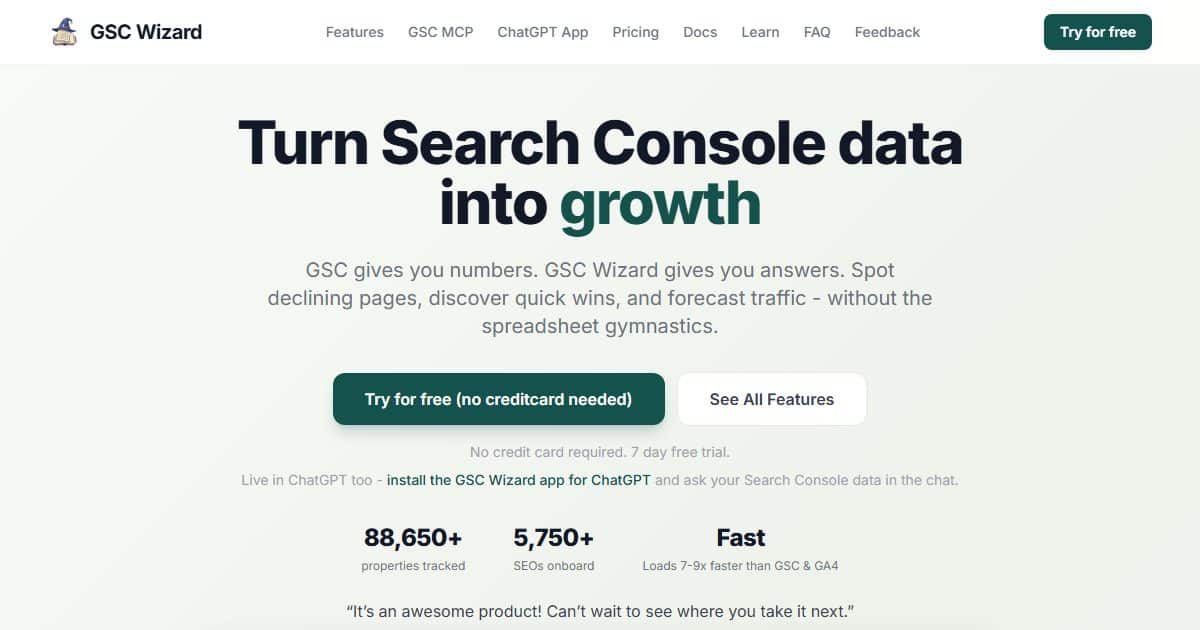
The use case built for agencies is client reporting. You ask for “January’s report for example.com against December,” and it runs the full analysis, saves it as a shareable report, adds the client contact and grants them access. The client signs in with their own email, so you never share your login. It also covers GA4, Bing Webmaster Tools, Yandex and Merchant Center through the same connector, with cannibalization, content decay and striking-distance analyses built in.
One caveat that’s on you, not the tool: Search Console itself undercounts. We dug into the gap in our dark clicks study, and it’s worth a line in every client report so nobody panics over a “drop” that’s really missing data. If you want more options for this job, we compared seven Search Console MCP servers separately.
Billing: Fastbooks keeps retainers invoiced and the books current
An agency lives on retainers. The month you forget to send one is the month payroll gets tight, and the month a client pays on day 60 is the month you find out how much cash you actually had.
Fastbooks handles invoicing and bookkeeping in one workspace. The homepage demo is literally a monthly retainer invoice set to repeat, which is the exact shape of most agency billing. Recurring invoices run on any billing cycle, payment reminders go out on a schedule you set (a friendly one at three days overdue, a final notice a week later), and AI reads your bills and receipts and posts them to the ledger.
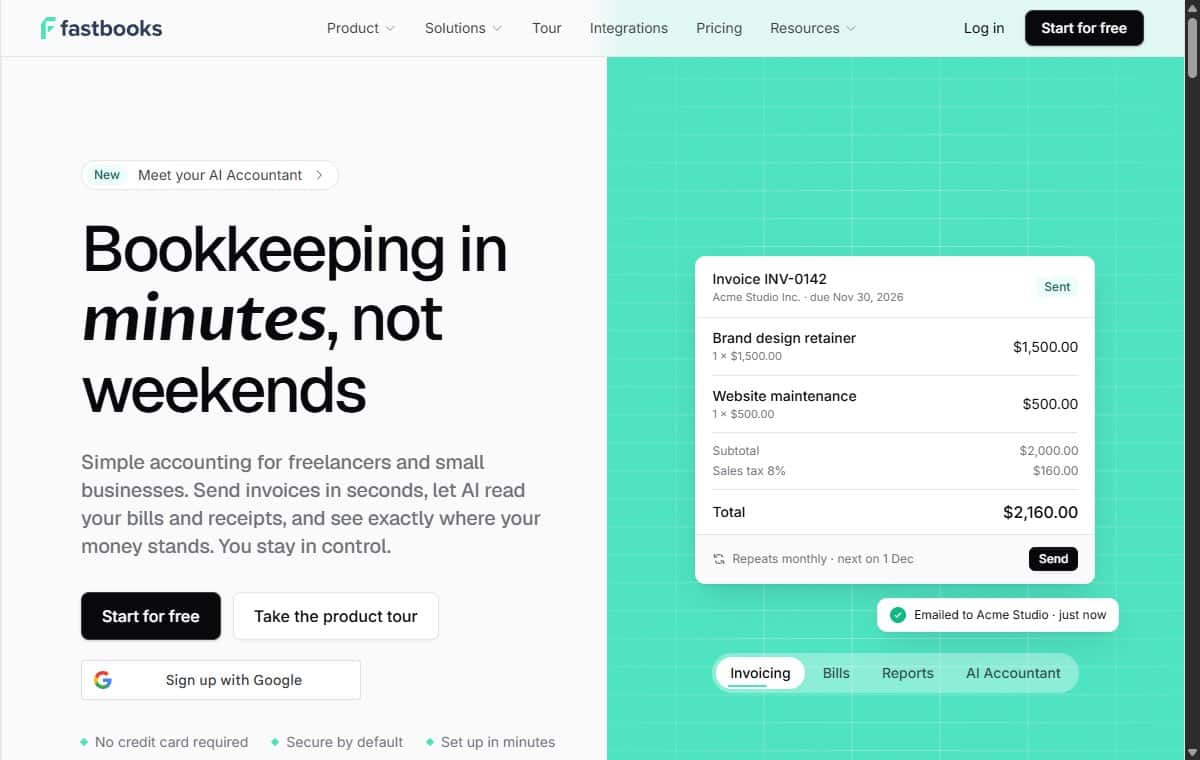
- Quotes and invoices in your branding, sent by email or a public link, with payment tracked.
- Stripe sync and bank feeds, so payouts and fees land without manual entry.
- 13+ reports, including Profit & Loss, Balance Sheet, Tax Summary and Aged Receivables, with CSV export.
- An AI Accountant that answers questions like “which invoices are overdue?” from your own ledger.
- Team access with role-based permissions for a partner or your accountant.
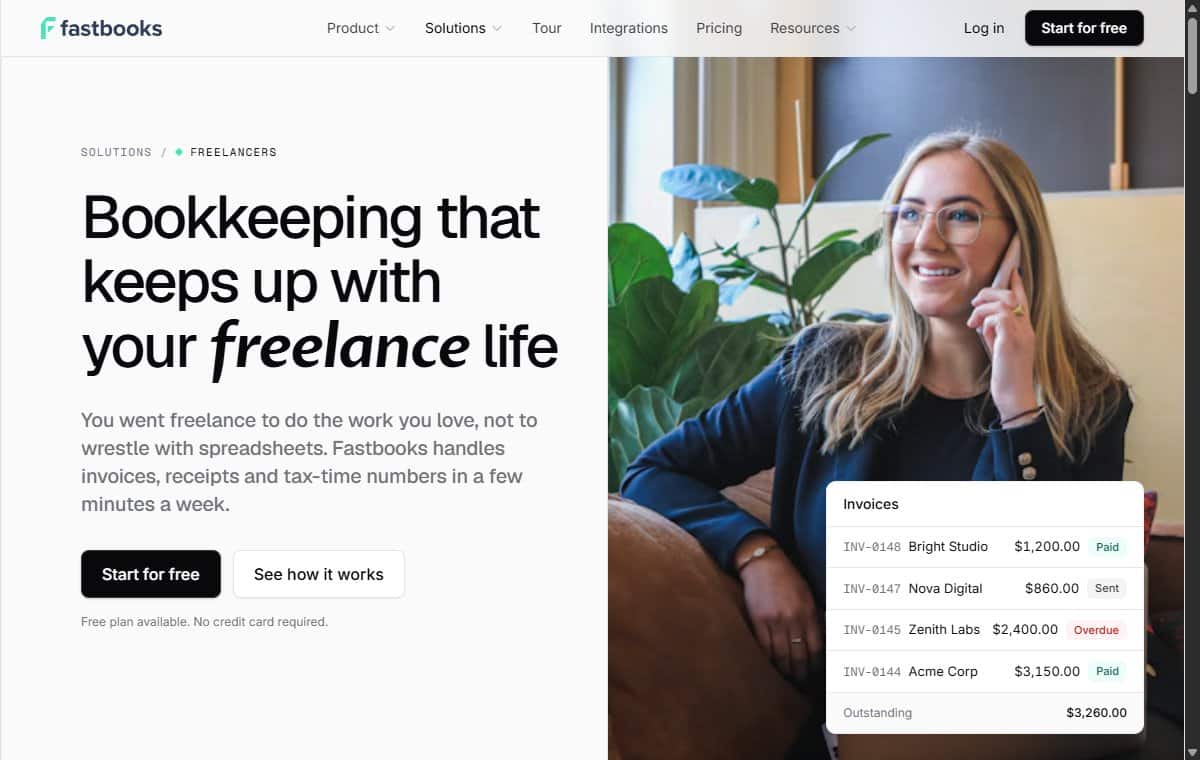
There’s a free plan for one user with unlimited invoices and bills, and Pro is listed at 20 USD a month for up to three users (homepage, 12 November 2026). No Fastbooks interview exists yet, so the second image below is from its freelancer page.
If you’re still solo, we went deeper on this job in invoicing and bookkeeping tools for freelance SEOs.
Process: Oleno keeps the team on the same playbook
Here’s the problem nobody budgets for. One person on your team figures out how to get great work out of Claude or ChatGPT. Their briefs are sharp, their drafts need half the edits. Then a new hire starts, uses an old prompt, skips the review step, and you’re back to fixing work yourself. When that person leaves, the process leaves with their laptop.
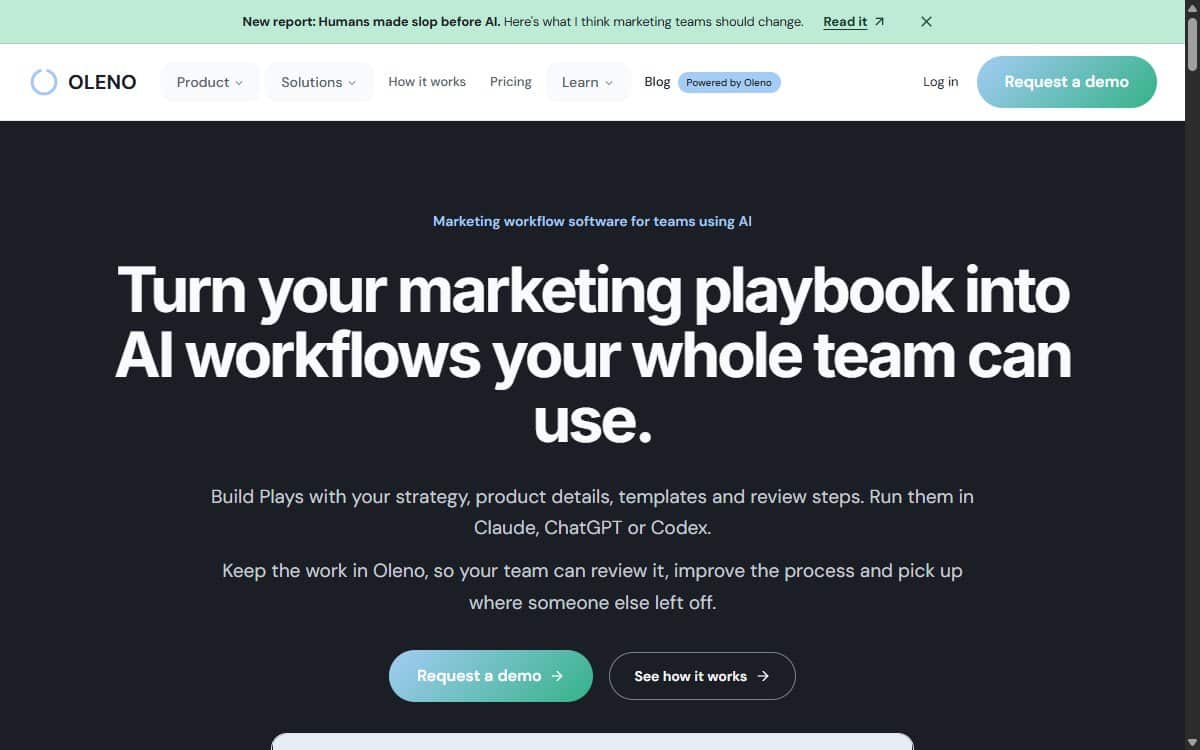
Oleno’s marketing governance software is built for that gap. You build “Plays” in Oleno (your strategy, product facts, templates and review steps), and your team runs them in the AI tool they already use: Claude, ChatGPT or Codex, connected through MCP. Drafts, feedback and decisions save back to Oleno, so anyone can review the work, hand it off, or pick up where someone else left off.
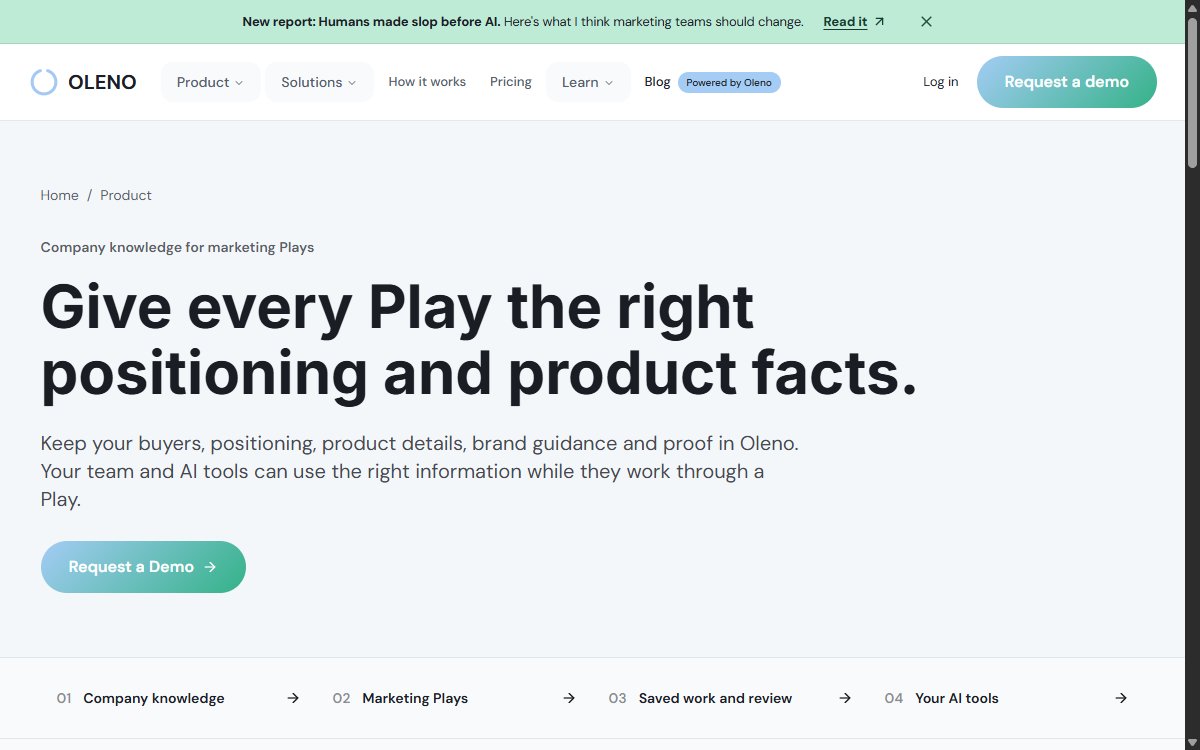
For an agency, think of each client’s positioning, approved claims and voice as the company knowledge, and your audit, brief and content workflows as the Plays. Oleno’s own page says it plainly: “Your agency needs approved product claims.” When a product detail changes, you update it once in Oleno and future Plays use the current version. There’s no Oleno interview yet, so the second image is its homepage.
The jobs the specialists don’t cover: proposals, updates, tasks and calls
Four more jobs show up in every agency, and each has a tool that does it well without trying to be your whole business.
Proposify for proposals
Proposify builds branded proposals, quotes and contracts from templates, with e-signatures and real-time insight into how prospects engage with each proposal. If you’re still emailing PDFs and wondering whether anyone looked, start here.
Loom for client updates
Loom records your screen and camera and gives you a link to share. A three-minute walkthrough of this month’s report beats a 30-minute call nobody wanted, and the client can rewatch it when their boss asks what you did.
Trello for client task tracking
Trello is boards, lists and cards. One board per client, one card per deliverable, and nothing lives only in someone’s head. It’s not fancy, and that’s the point for a team of three.
TidyCal for booking calls
TidyCal is a booking link that syncs your calendar and can take payment through Stripe or PayPal when a client books, which works nicely for paid strategy sessions. It’s what I use to book podcast guests, and it’s sold as a one-time purchase rather than another subscription.
Building your SEO agency stack one job at a time
Don’t buy all nine this week. Look at your calendar from last month and find the job that ate the most hours. Was it writing client content? Chasing invoices? Rebuilding the same report six times? Cleaning up after a teammate who used the wrong brief? That’s the one to fix first.
Then ask yourself the harder questions. Which of these jobs are you charging clients for, and which are you quietly eating? If your link vendor disappeared tomorrow, could you explain every link they built? And if your best person left on Friday, would your process leave with them? For more on that last one, read Tom Malesic’s agency lessons from 30 years in the business.