
SEO is an essential aspect of any e-commerce business, especially for those looking to drive organic traffic to their online stores. By optimizing product URLs, descriptions, schemas, and SKUs, online stores can enhance their visibility and increase their chances of being discovered by potential customers.
In this article, we’ll explore the best practices for driving organic traffic to an online store through SEO, including optimizing for buyer intent keywords, improving user experience, and avoiding common SEO mistakes.
Before we start, have you seen the ecommerce SEO strategy that IKEA uses to generate jaw-dropping amount of organic traffic? Check it out:
How important is SEO for e-commerce websites?
A1. SEO is important for e-com as it helps to optimize your products in a proper way i.e product URL, description, schema, and product SKU Optimization for better search
and also helps to drive more traffic to your e-commerce website
keyur shah | SEO
Depends on the market/business, and the goals. For big brands, it’s far less important than independents etc. But far to often, the focus is on Bottom of Funnel(BoF)/Conversions than on ToF, brand/product awareness etc.
Darth Autocrat (Lyndon NA)
A1.1) SEO is vital for ecommerce website, but in the way you might think. It’s not all about showing up for bottom of the funnel product queries, or even product-focused category queries.
Jonas Sickler
How can e-commerce sites optimize their product pages for search engines?
A2: Optimize for buyer intent keywords Deliver superior UX Answer all sales objections on the product page Provide user reviews and customer testimonials
Sweepsify
That’s not a small question! Relevance is the obvious one – which is often broader than people realise (it’s not just make/model, but part number variants, features, variant options (such as colour/size), suitability etc. (if it’s an attribute, it counts)
Darth Autocrat (Lyndon NA)
A2 This is Twitter – not enough characters! There are so many things – here are a few: Site structure and URLs Meta data and schema Images and descriptions UX and design of the funnel Product descriptions Everything needs to be unique!
Simon Cox
What is the role of keyword research in e-commerce SEO?
A3 “Keyword research is the foundation of any e-commerce SEO strategy, as it’s closely intertwined with all tasks you are currently doing and will be doing for your website.” We described the significance and process in detail here https://bit.ly/3LraOnC #serpstat_chat
Serpstat
A3 First step for me is competitor keyword gap analysis – what have we missed and why.
Simon Cox
A3) Keyword research reveals how your audience thinks, what they need, and where they are in the funnel. It also helps you visualize the full customer journey so you can spot content gaps, influence decisions, and control your brand’s narrative.
Jonas Sickler
How can e-commerce sites optimize their category pages for search engines?
By knowing what the “collective” term is, the variants, and building a nav structure (primary or sub) to match what language and organisation actual consumers use/know/expect. Ensuring things like filters/sort/pagination etc. don’t undermine/confuse things.
Darth Autocrat (Lyndon NA)
A4: E-commerce sites can optimize their category pages for search engines by using relevant keywords in the page title, meta description, and URL, adding high-quality images and descriptions, and ensuring the page is mobile-friendly and loads quickly. #serpstat_chat
Megan Newman | eCommerce
A4: Make sure you have your on-page elements covered – a great title that draws people in from the SERP, a description with a USP preferably, and a heading that accurately describes the products.
Emma
How to optimize e-commerce site navigation for search engines?
The only real “for search engine” bit you should worry about is whether the bots can see the links, and access the destinations. Everything else should be user-focused. Organisation and terms should match user expectations/be quickly and easily associated
Darth Autocrat (Lyndon NA)
A5: Make sure your navigation is clear and concise, use descriptive anchor text, and include relevant keywords in your URLs. Also, consider implementing breadcrumb navigation and optimizing your site structure for easy crawling. #serpstat_chat
Megan Newman | eCommerce
The menus should be simple&crisp, optimized breadcrumbs to make users understand the hierarchy structure well. Ecomm sites must have a search bar for easy searching of the product they desire to buy or navigate to. #serpstat_chat
Krishna Shekhar
What are the best ways to optimize e-commerce site images for search engines?
#SERPStat_Chat A6. I work it backwards – * Not tiny * Not low quality * Not stock * Not irrelevant People want to “see” the thing they are spending on, and they don’t need/want to see the same blurred garbage they saw on Amazon, Ebay etc.
Darth Autocrat (Lyndon NA)
A6.1 Use high-quality, unique, and relevant images Use supported image formats and optimize their size #serpstat_chat
Olena Prokhoda
A6: – descriptive file names – alt tags – compress images without sacrificing quality (webp). Also, consider using image sitemaps and implementing structured data. #serpstat_chat
Megan Newman | eCommerce
What are the common SEO mistakes that e-commerce sites make?
Aside from the “general SEO screwups”, such as noindex/disallow or dupe-domains… … the e-com specific ones would have to include things like: mass-duplication (same product attached to multiple category URLs etc. mass-crawling (every filter/sort etc.)
Darth Autocrat (Lyndon NA)
A7 robots.txt disallowing everything when you launch because someone didn’t want to set up a password protected dev site. But tbf thats not an ecom only issue
Simon Cox
A7: Some common SEO mistakes e-commerce sites make include duplicate content, poor site structure, lack of keyword research, and ignoring mobile optimization. #serpstat_chat
Megan Newman | eCommerce
How can e-commerce sites measure the success of their SEO efforts?
#SERPStat_Chat A8. Depends on the goal(s). The obvious one is the quantity of immediate conversions from SE traffic. Harder to attribute is delayed/indirect conversions from originally SE traffic. But people should also be looking at things like…
Darth Autocrat (Lyndon NA)
A8. Power sales, sales and sales PERIOD. #serpstat_chat
Krishna Shekhar
A8 – £/$/€. This is the way. #serpstat_chat
Simon Cox
Driving organic traffic to your e-commerce website is crucial to the success of your business. The key is to implement a well-rounded SEO strategy that includes optimizing your product descriptions, URLs, and metadata, as well as focusing on buyer intent keywords and providing superior UX.
Keyword research is the foundation of any e-commerce SEO strategy, and competitor keyword gap analysis is an important step in identifying missed opportunities. To optimize your category pages, use relevant keywords in the page title, meta description, and URL, and ensure the page is mobile-friendly and loads quickly.
Your navigation should be clear and concise and include descriptive anchor text and breadcrumb navigation. Finally, be mindful of common SEO mistakes such as duplicate content, poor site structure, and ignoring mobile optimization. By implementing these best practices, you can drive more organic traffic to your e-commerce website and increase your chances of success.
Jeremy’s Take: For an Online Store, the Site Is the Whole Game
You can pour traffic into an ecommerce site from every channel, but if the site itself is weak, none of it converts. The website is the center of all your marketing — get the category pages, structure, and experience right first, then drive organic traffic into something that actually sells.
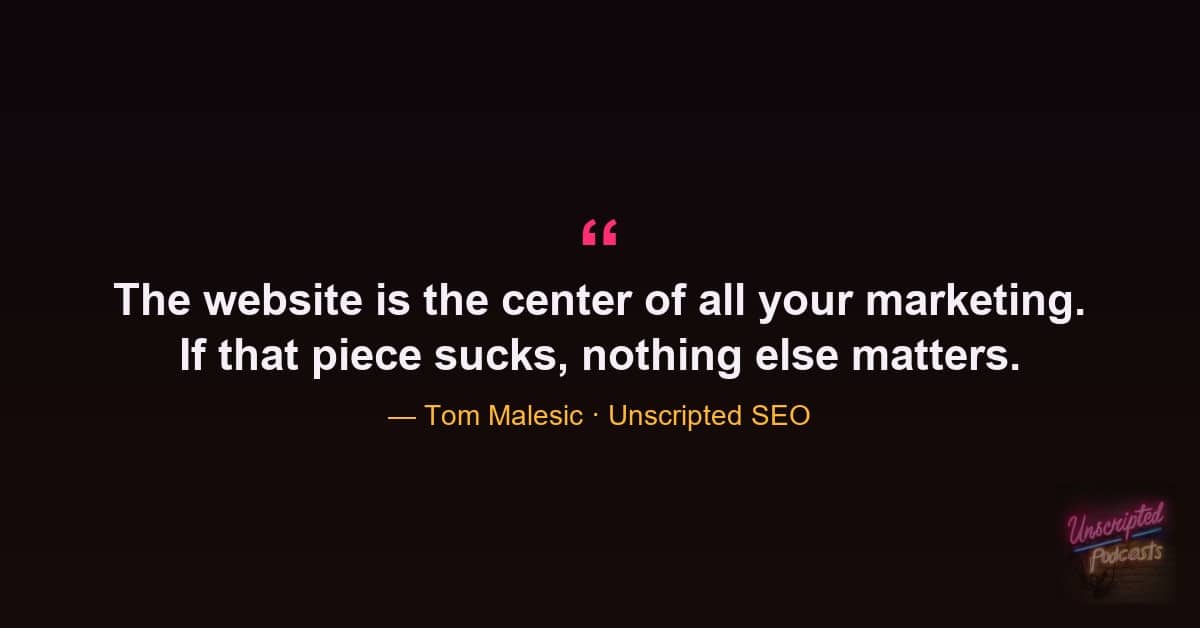
The website is the center of all your marketing. If that piece sucks, it doesn’t really matter. Anything else you do is also terrible.
Tom Malesic, Unscripted SEO Podcast
Fix the center first. Tom Malesic on website-first marketing in his Unscripted SEO episode.
Build store pages that actually capture organic demand.
Our Long-Tail Category Pages for eCommerce turn search intent into indexable, converting pages — so the organic traffic you earn has somewhere to land.