
A Conversation with Paul Baterina of REVOLVE
Paul Baterina has been the SEO team at REVOLVE for 13 years — 260,000 products, high fashion brand constraints, and a C-suite that wants measurable numbers. Here’s what he’s learned about enterprise e-commerce SEO, long-tail category pages, and the honest state of AI visibility.
Long-Tail Category Pages: The Most Provable SEO Win
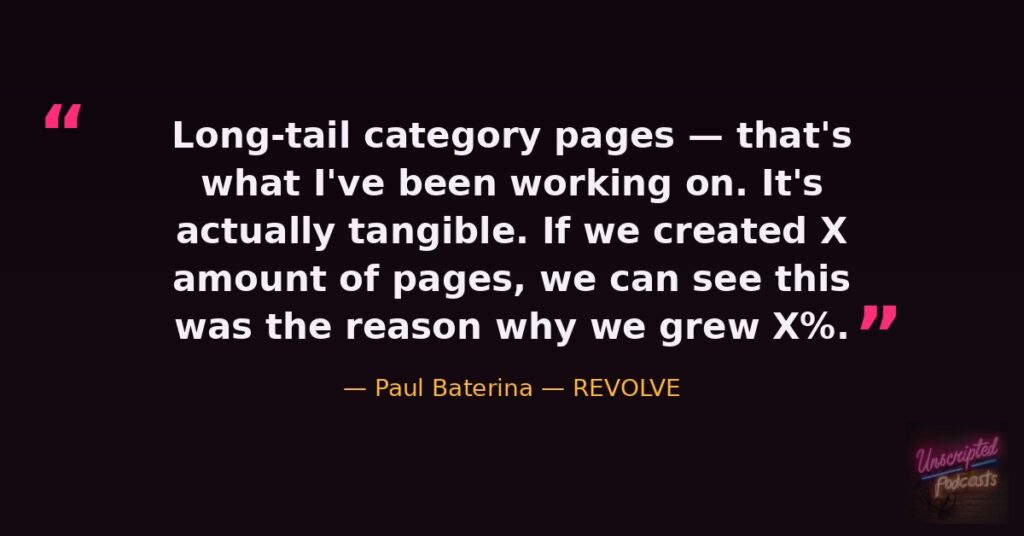
After years of fighting for technical SEO budget, Paul found the one thing that convinced C-suite: long-tail category pages with direct attribution. “If we created X amount of pages, this was the reason why we grew X%.” The rule: minimum three products per category page. Fewer than three risks thin content flags. At scale, this approach delivered measurable, quarter-over-quarter growth that Paul could point to directly.
The Live Test: 25% Lift on Long-Tail Pages
Paul is currently running a control group test: adding content above and below the fold to long-tail category pages. Four weeks in — test group up 25%, control group down 5%. That’s a rollout signal for 40,000+ pages. He’s also tracking whether LLMs cite those pages when answering fashion queries like “what’s a dress I can wear for spring” — early indication they do.
The Brand Voice vs. SEO Tension
REVOLVE has no blog. High fashion is imagery-first — blocks of SEO text undermine the brand experience. Paul’s workaround: work behind the scenes on entity signals, structured data, internal linking, and category page architecture. The higher the price point, the harder the fight for content. You win on signals you can build without touching the visual identity.
AI Visibility: Honest Assessment
REVOLVE is already at ~$58K/month in LLM-driven revenue at low volume. The strategic play Paul is building toward: use LLMs to identify citation sources, then prioritize brand placements on those specific sites. Not chasing every new GEO tactic — instead, optimizing the entity and the brand’s presence on the sites LLMs already trust. That’s link building with AI-guided targeting.